
27 August 2026
By Rob — bench hand joiner, time served
Rotten Window Sill Repair in Pontefract
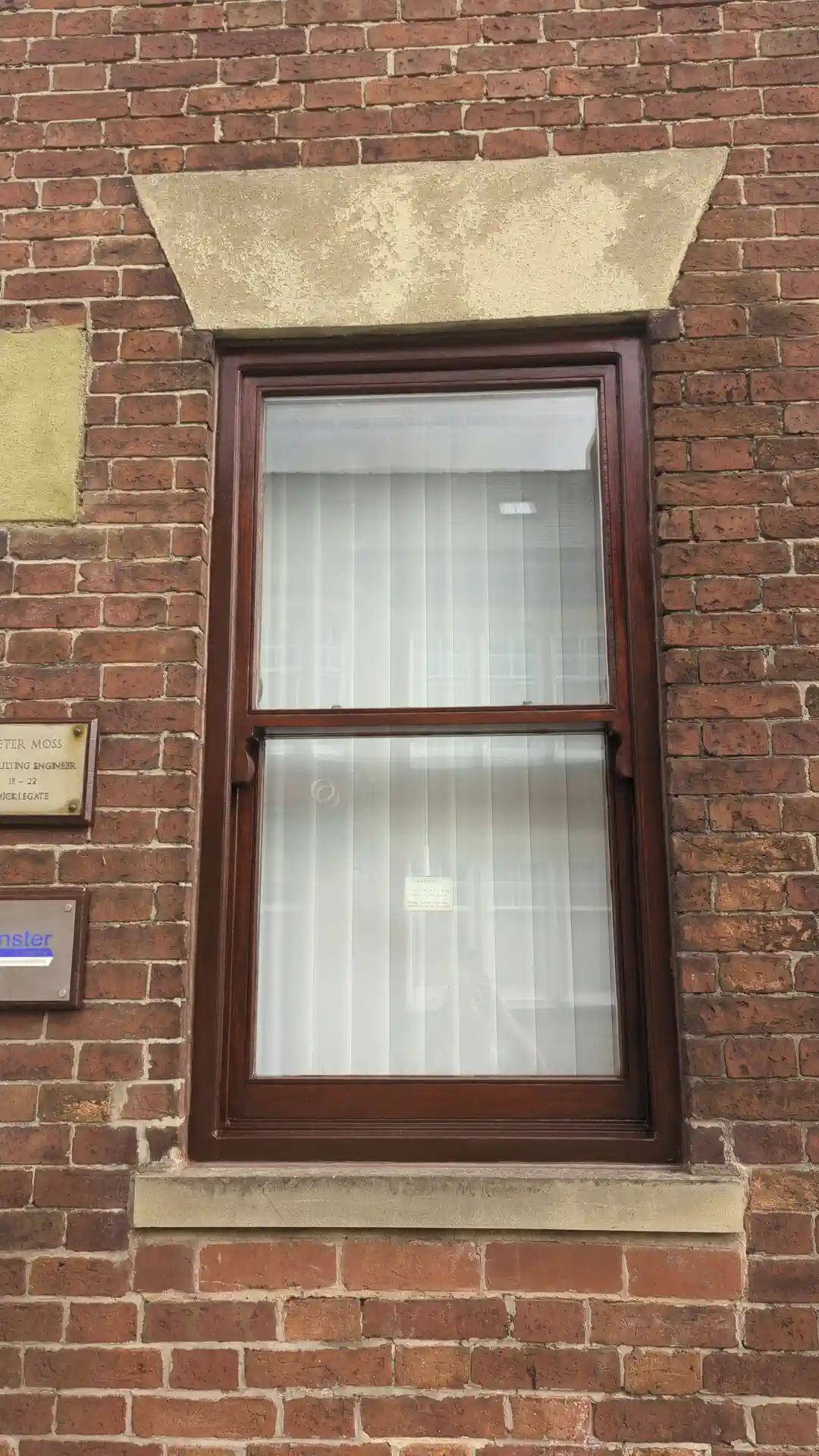
Timber window sills are almost always the first part of a window to go. Water runs onto them, sits on them and works into any gap it can find, and once the finish has thinned they take the punishment for the whole window.
This one was on a commercial office building on Micklegate in Pontefract. Eleven timber windows, and nothing done to any of them since the owners took the building on in 2008. Here is how far the rot had actually gone, why filler on its own would have been a waste of everybody’s time, and how the sills were saved with spliced-in timber instead of new windows.
Where timber window sills rot first
Look at any weathered timber window and the damage will be in the same places: the top face of the sill, the front edge, and the bottom few inches of the stiles where they land on it. That is where water collects and where it stays longest.
The rest of a window can be in reasonable condition while the sill is finished. That is worth knowing, because it is the difference between a local repair and a quote for replacement windows.
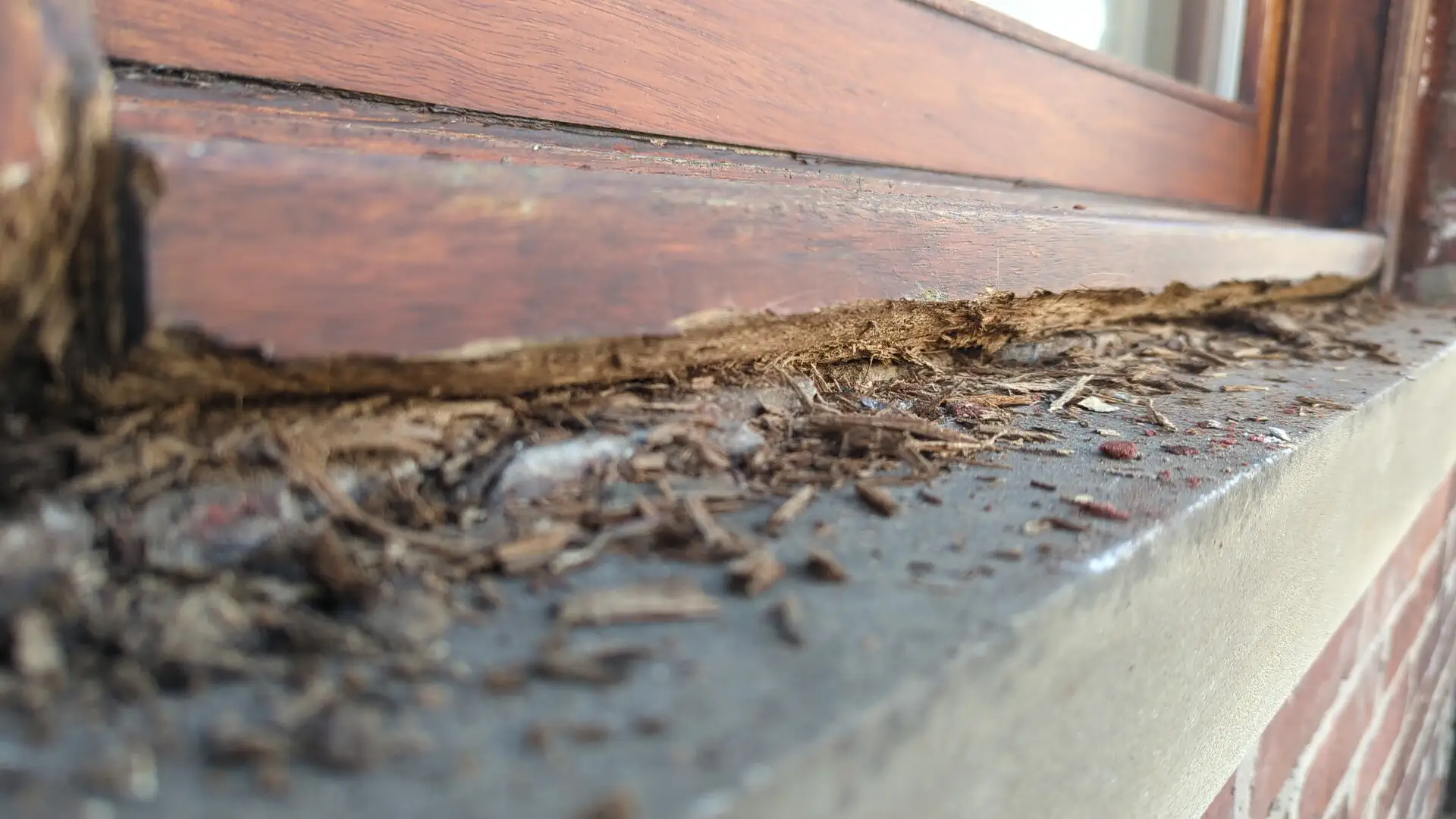
On these windows the coating had worn thin or failed completely on the exposed elevations. The timber underneath was dry and grey. The sealant between the frames and the brickwork had cracked and pulled away, so water was getting in behind the frame as well as sitting on top of the sill.
Finding out how far the rot has gone
You cannot price or plan a sill repair by looking at it. Decayed timber often sits behind a coating that still looks more or less intact, so the first job is to find the edge of the sound wood.
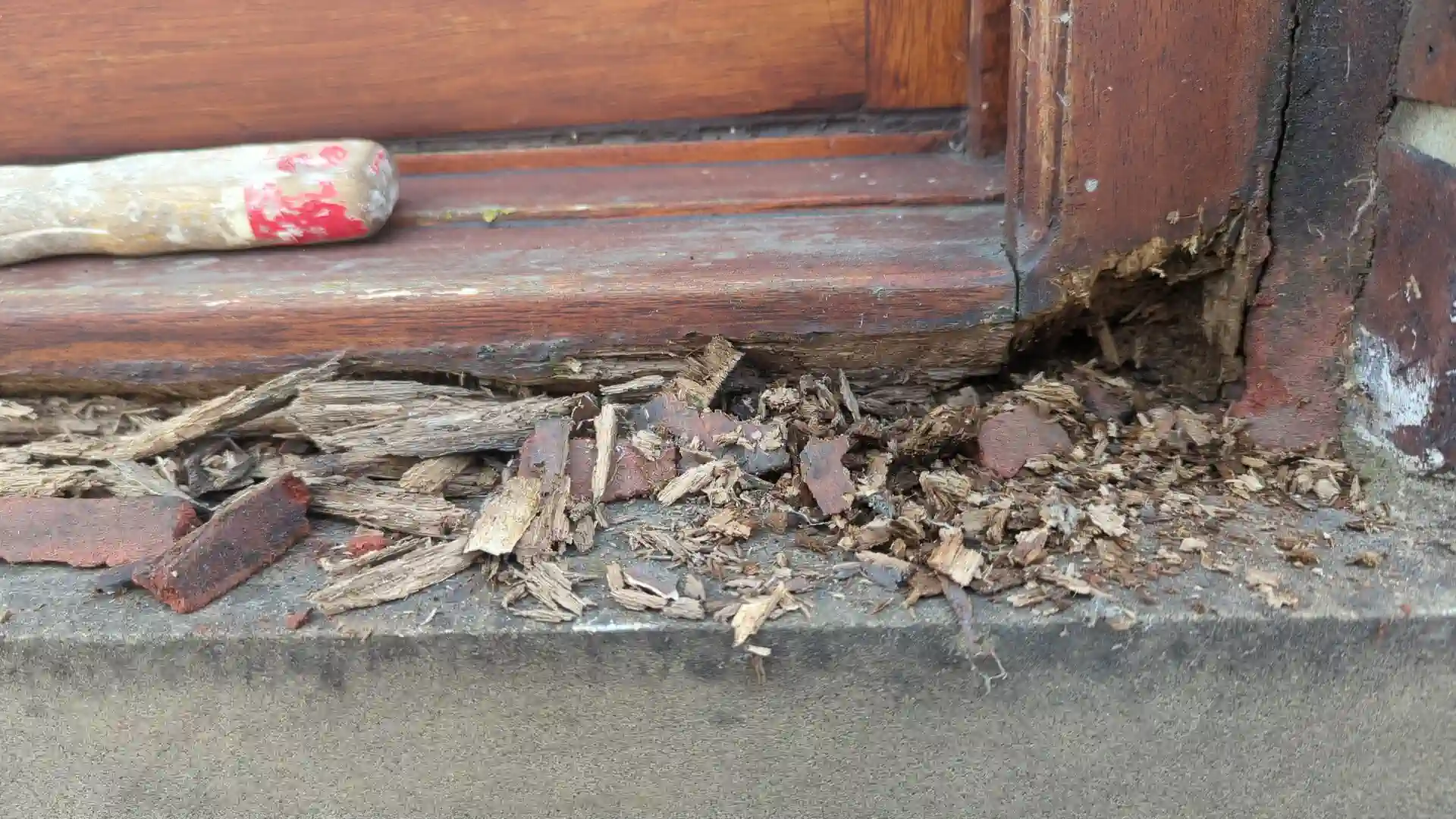
That means scraping the loose material off and probing the timber until it stops being soft. On a bad corner the decay usually runs further than it looks from outside — under the stile, back along the sill, into the joint.
We set out a written repair schedule for every numbered window on the building before any of it was priced, so what was straightforward maintenance and what was a genuine repair were separated from the start rather than discovered halfway through.
Filler, or a splice repair?
This is the decision that matters, and it is not a matter of taste. It depends entirely on what is left underneath.
Where the defect was shallow and there was firm timber below it, a two-part exterior filler was the right answer. It was filled, shaped and sanded to follow the existing profile so the sill still read as one piece.
Where a corner had gone soft all the way through, filler was no use. Filler does not carry anything — it needs sound timber to key into. Put it into decayed wood and you have hidden the problem rather than repaired it, and it will push back out within a season or two.
On two of the front windows the sills and the bottoms of the stiles were past filling. Those got new timber.
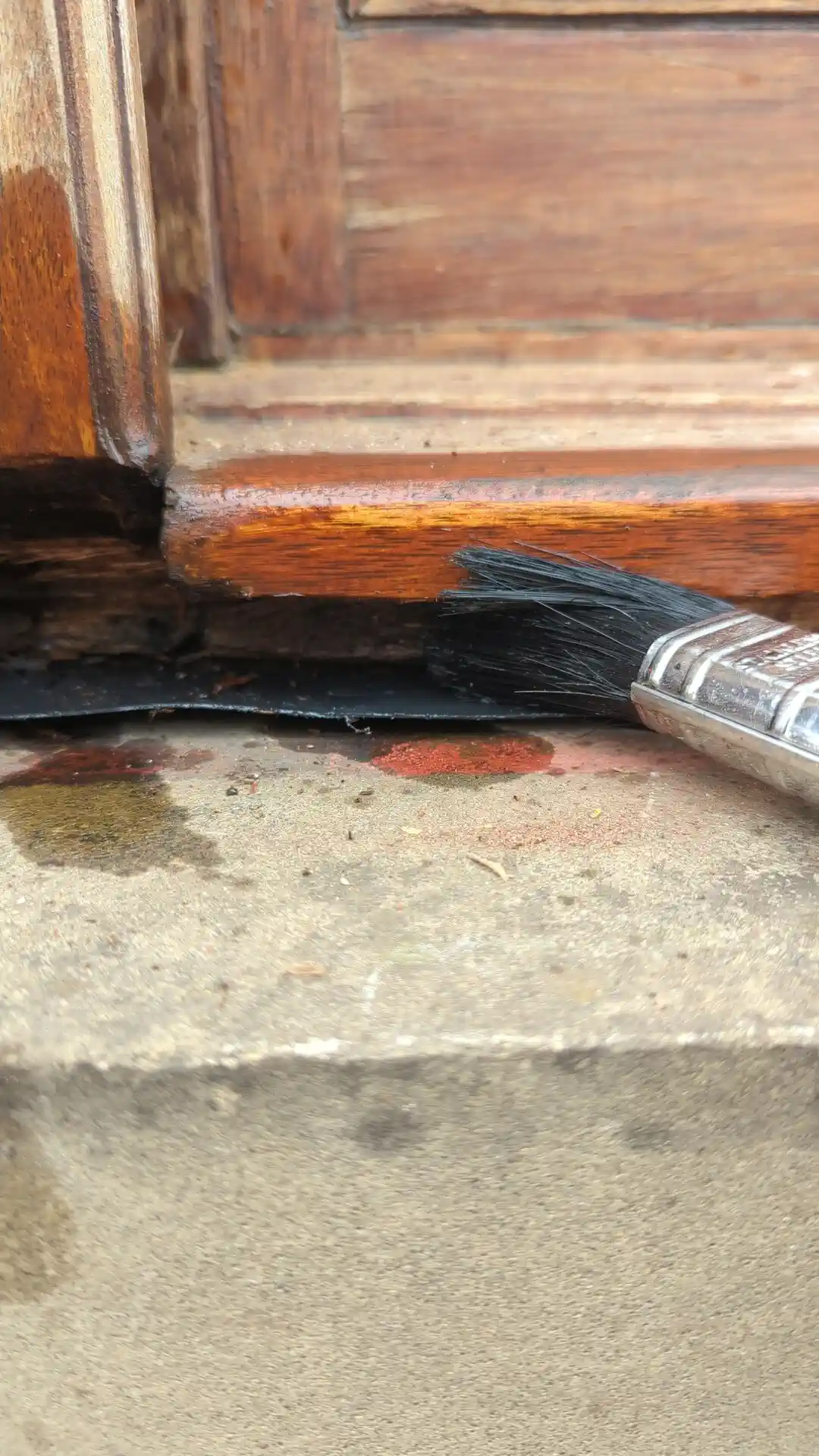
Cutting a sapele splice into a window sill
A splice repair means cutting the failed section out square, back to timber that is firm, and letting a new piece in to replace exactly what was lost. Done properly it is not a patch stuck on the outside — it becomes part of the sill.
The new pieces were cut from sapele. It is durable, it machines cleanly and it takes an exterior finish well, which is what you want on a sill that is going to sit out in Yorkshire weather. Each piece was shaped to follow the existing sill and stile profiles rather than being left as a flat block.
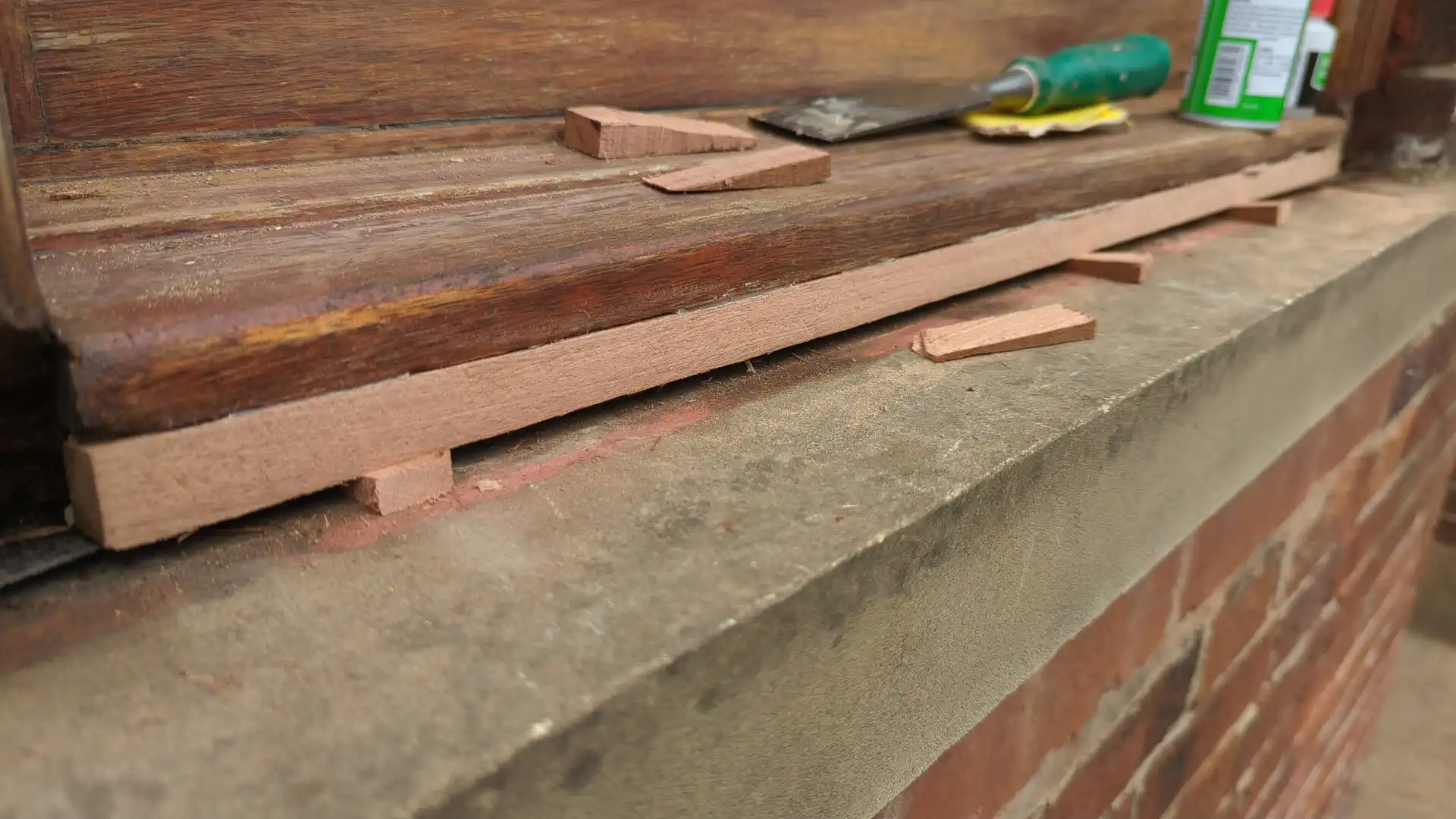
Everything gets dry-fitted first. You want the joints tight and the profile running through before any adhesive goes near it, because once it is bonded you are committed.
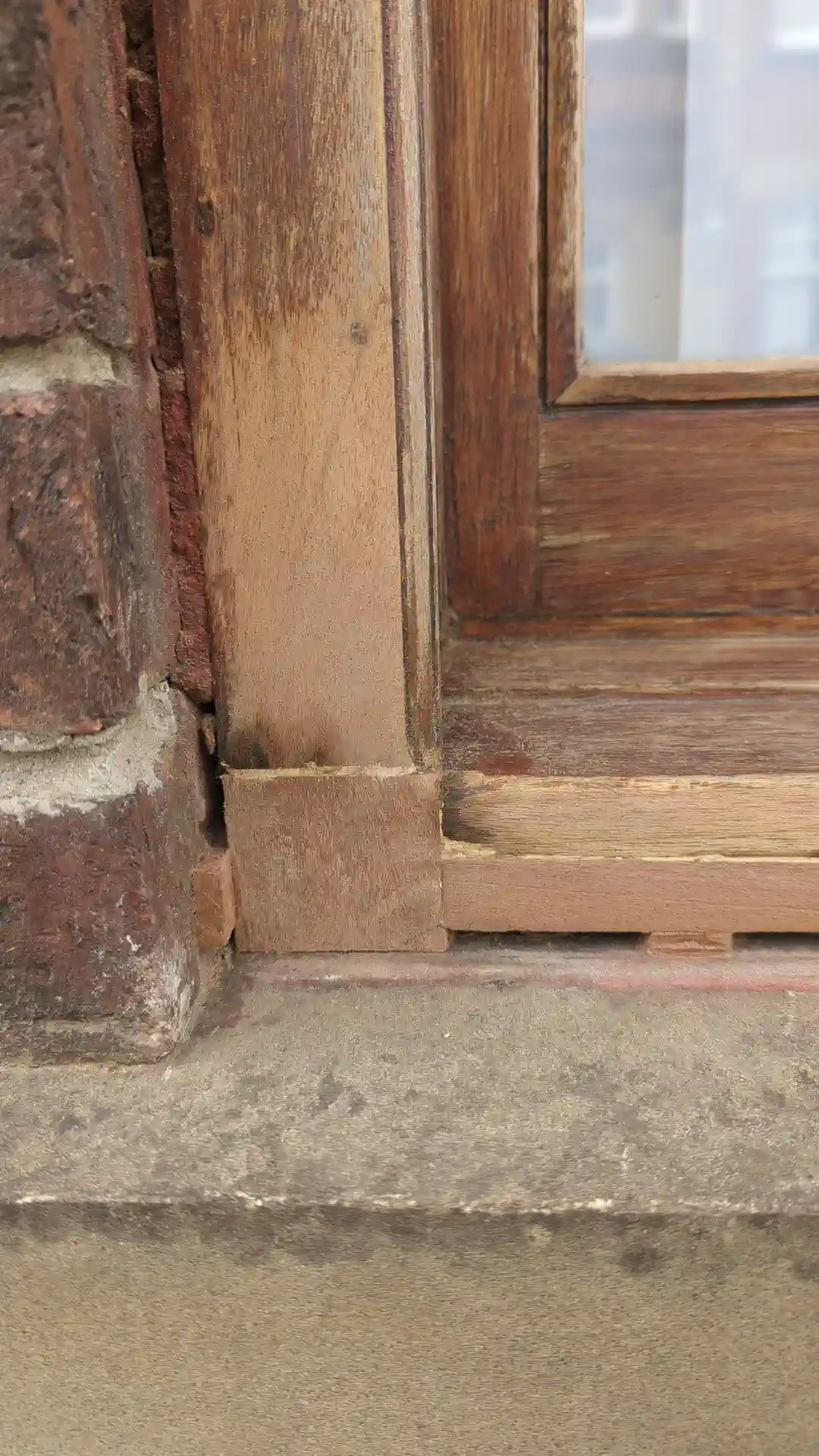
That corner is the detail worth looking at. Two splices meeting where the stile lands on the sill, cut in flush and running through the existing profile. Once it is coated you will not pick it out from the original timber, which is the whole point.
Sealing the repair so the water stays out
Repairing the timber and stopping there is half a job. If the perimeter sealant has failed — and on a window with a rotten sill it usually has — water will simply carry on getting in behind the frame and you will be back at the same corner in a few years.
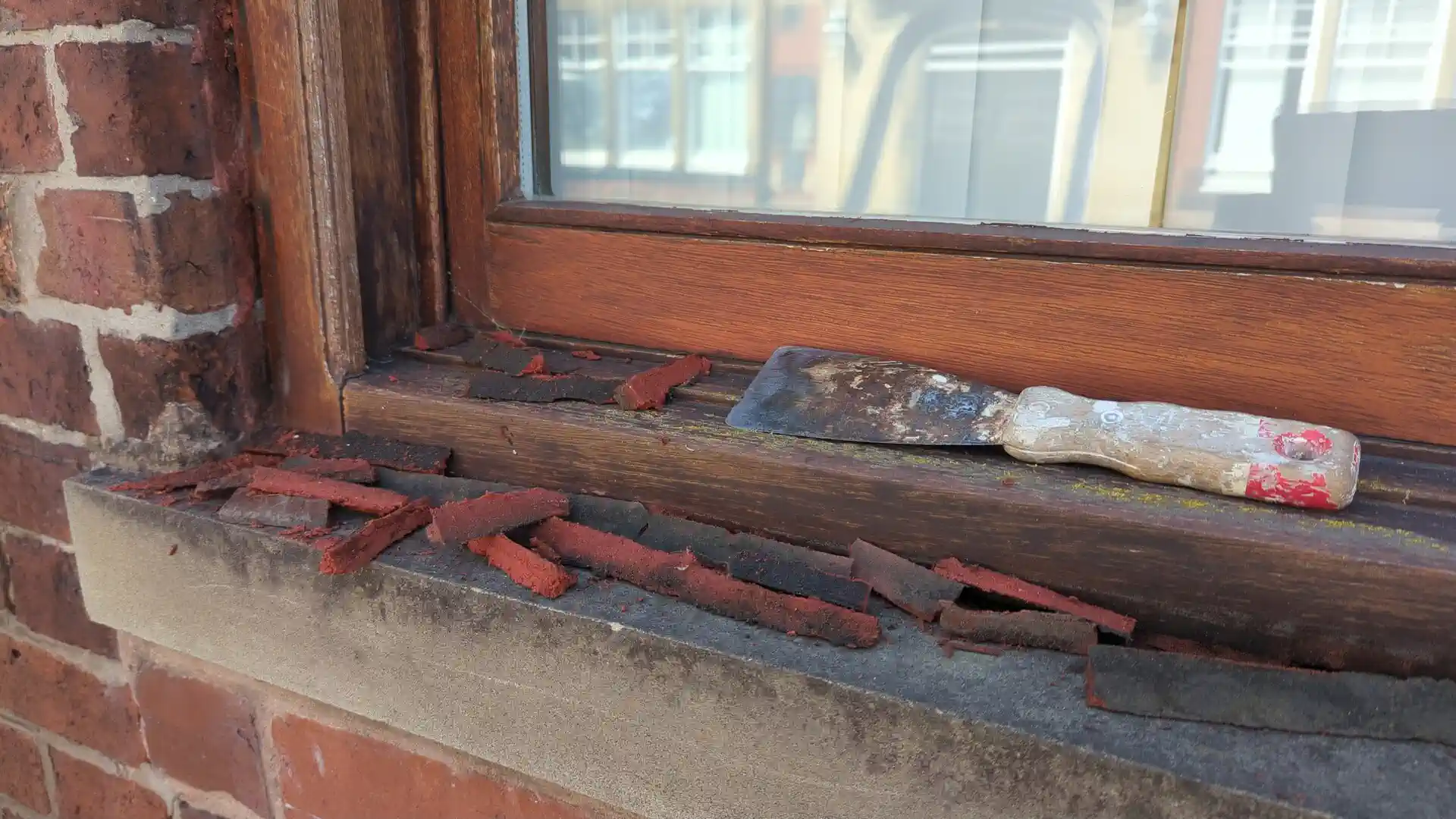
The old sealant was cut out of the accessible joints and renewed after preparation, closing the junction between the timber frame and the brickwork. Failed bedding around the glazing beads was dealt with at the same time.
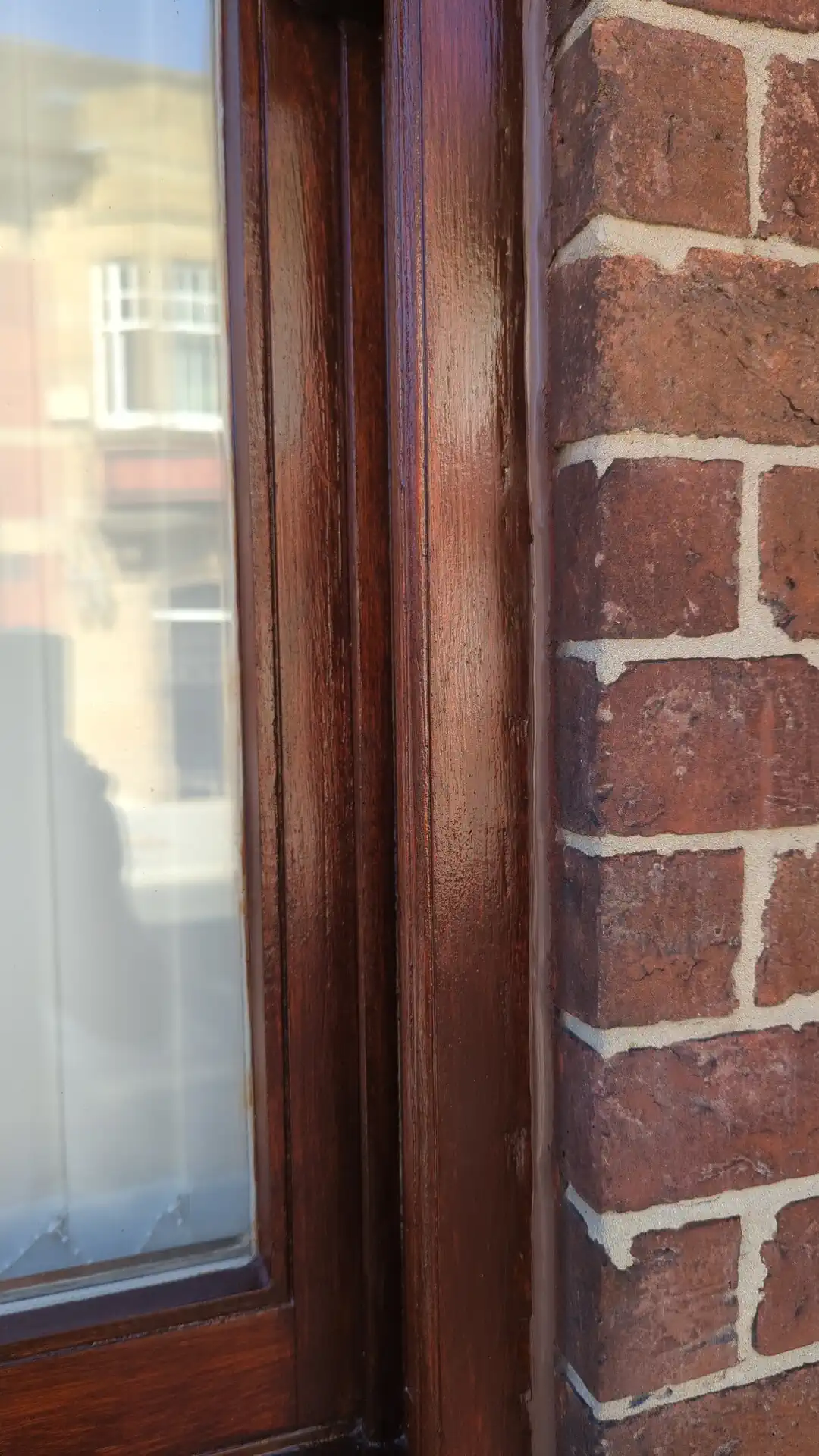
Then two full coats of exterior woodstain over the lot, repairs included, so the new timber is protected the same as everything around it.
Repair or replace a rotten window sill?
People are told far more often than they should be that a rotten sill means a new window. Sometimes it genuinely does. Most of the time it does not.
The questions are simple enough: how much sound timber is left, where is the water getting in, and can the failed section be joined onto something firm. If the answers are “most of it”, “here”, and “yes”, it is a repair — and a repair keeps the original window, costs less disruption and holds its appearance in a building where new units would look wrong.
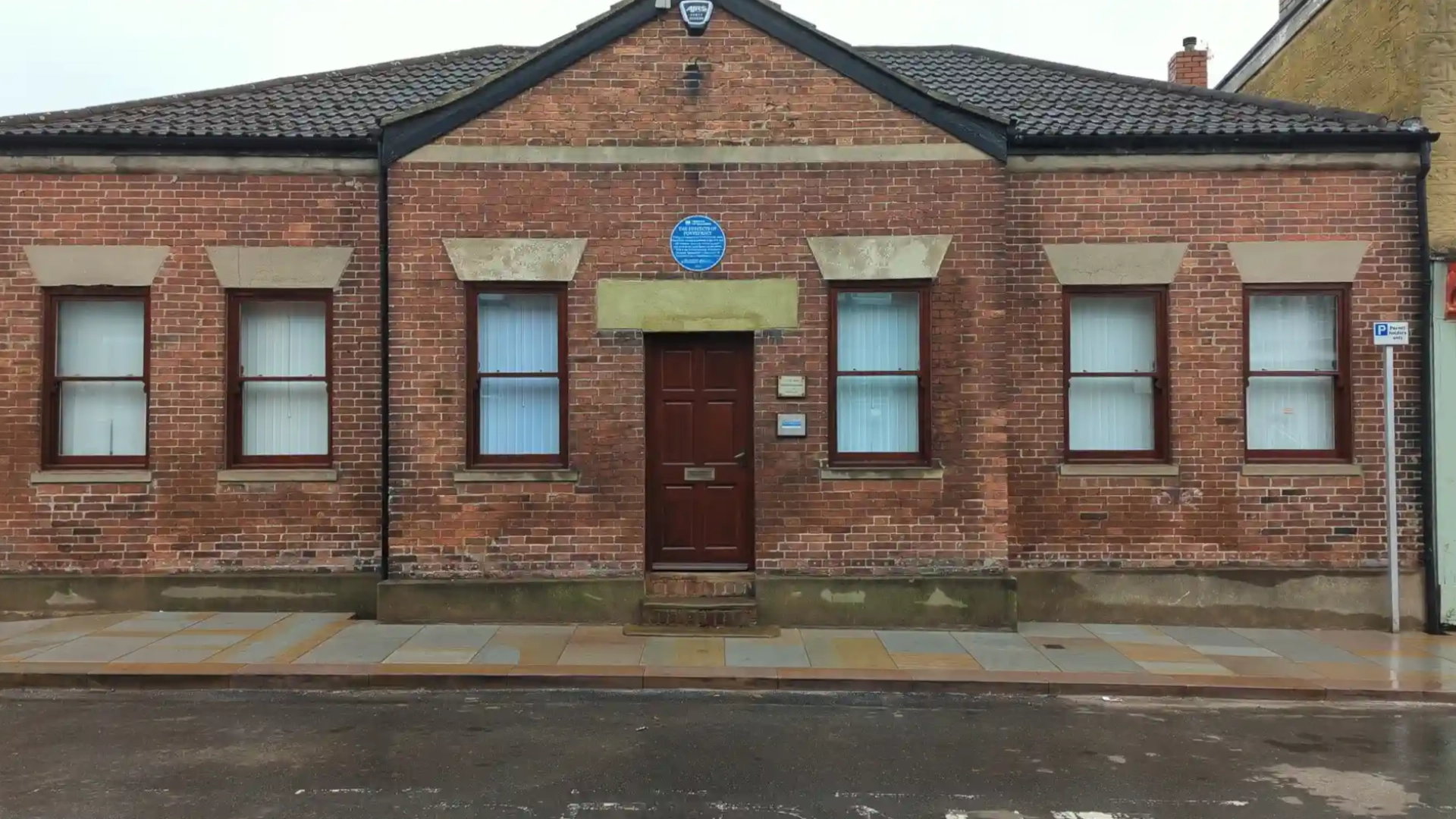
All 11 windows on this job were kept. That is the same repair-or-replace judgement that runs through any timber repair or sash and timber window job we take on, and it is worked through in more detail in can timber windows be repaired?. The full job, including the conservation-area side of it, is written up as the Dunster Windows case study.
Timber window sill repairs in Pontefract and West Yorkshire
This one was in Pontefract. Heritage Joiners takes on rotten window sill repair, splice repairs to sills and stiles, frame sealing and exterior timber window maintenance across Pontefract, Wakefield, Castleford and the wider West Yorkshire area, on houses and on commercial buildings.
If you have got a sill that has gone soft, send Rob some photos — the whole window, and a close-up of the damaged corner — and he will give you an honest first view on whether it is a filler job, a splice, or genuinely past saving.